Imagine this: For years, a chicken farmer has had a healthy and profitable operation. The business has experienced the normal ups and downs, but no security crises have befallen it.
One constant has been foxes trying to get at the chickens, especially in the dead of night. But over the years, the predators, though persistent in their efforts, have cumulatively taken only a minuscule number of the farmer’s birds. In time, though, an especially menacing figure emerges among the would-be raiders. And this is no ordinary fox. He is massive, crusty and mangy-looking, and long-lived and determined. And he is an extraordinarily prolific thief out in the rest of the countryside. He is a thoroughly bad lot.
This wicked old fox has a fixation on defeating the farmer’s security, but his usual nighttime sneaking about has not worked. Time for a new, bolder approach, he thinks. So one day, in broad daylight, he intercepts the farmer as the good soul is out on his rounds and mounts an extraordinary effort to gaslight the poultry man:
“Your security is rubbish. You’ve been losing chickens left, right and center to all manner of predators, and you haven’t known a thing about it. I am a fox, yes, but I am no thief, sir. Would I be here talking to you if I were intending to steal your chickens? You do have a problem, and only I can fix it, and I’ll fix it like nobody’s ever seen.
“You have to do something about this security problem of yours, the one you are not aware you have. You have to fight like hell or you won’t have a farm anymore. The people who set up your security system and maintain it are all corrupt and dirty radicals who hate this great farm.
“But if you put the security of your chickens in my hands, you need think no more of the matter. I got this. Your farm will become hotter than anybody’s ever seen.”
Our farmer is a solid and sensible citizen, and he knows that at the bottom of his horrid soul, this fox is a thief by an immutable rule of nature. So the farmer grabs a stick, gives the lying fox a crack across the head and sends him running and shrieking back to the distant tree line. Thus our counter-factual tale ends with victory for the good guy.
The present reality in these great United States is different and more complicated, but it does feature a contest between good and evil.
Donald Trump gave a prime-time address to the nation on July 16 about supposed vulnerabilities and corruption in our election systems and argued for changes that he says are needed to ensure the security of those systems. The speech was a load of twaddle and a desperate attempt to gaslight the American people into believing that our elections are in crisis and under attack by sinister forces. The address was a mighty effort to gaslight the country about the security and honesty of its elections.
In reality, the only crisis facing our elections is that embodied by Trump himself and the conspiracy he is leading to corrupt our democratic machinery for ends including the benefit of a white-supremacist, fascist-minded and oligarchic minority. But perhaps his greatest object of all is to deny Democrats control of Congress so that no one will curtail his immoral use of the presidency and hold him accountable for his vast corruption.
Thus, the centerpiece of the speech was a pitch for Congress to pass the SAVE America Act. A summary of the legislation at congress.gov says, in part:
“This bill requires individuals to provide documentary proof of U.S. citizenship when registering to vote, and requires photo identification to vote, in federal elections.
“Specifically, the bill prohibits states from accepting and processing an application to register to vote in a federal election unless the applicant presents documentary proof of U.S. citizenship. The bill specifies what documents are considered acceptable proof of U.S. citizenship, such as identification that complies with the REAL ID Act of 2005 that indicates U.S. citizenship.”
The proof-of-citizenship requirement is not the only provision in the SAVE America Act. The legislation is, in fact, a Trojan horse. Kindly note that its sponsor is Republican Rep. Chip Roy of Texas and that his bill contains a provision that essentially copies from his home state’s anti-abortion legislation by licensing private citizens to become election vigilantes and harass other private citizens. I imagine that the MAGA-ites assume that the act will empower Republican private citizens against Democrat private citizens as well as election officials who do not play Trump’s crooked game. But the plotters should remember that the same knife that sticks the sheep can just as smoothly stick the goat.
Here is the relevant language in the legislation:
“The bill (1) provides for a private right of action for certain violations, and (2) establishes criminal penalties for certain offenses.“
This Trojan horse is also imbued with the Trump administration’s intention to use complaints conveniently supplied by MAGA-minded private citizens as a pretext for the Justice Department — which Trump hopes will still be led by his supplicant Todd Blanche — and the FBI under the ever-eager-to-please Kash Patel to intervene legally in just enough congressional elections where Republicans are in trouble to throw those races to the Trump loyalists. The FBI and Justice will seize election materials and declare that they have uncovered illegal and otherwise tainted ballots and will seek to disqualify enough votes to deny Democrats the number of wins they need to take control of Congress and begin holding Trump accountable. If you think this is fantastical thinking on my part, just watch how the strategy plays out if the SAVE America Act does somehow get Senate approval. Even without the SAVE America Act, they are going to try some dirty tricks.
Here’s Trump in his address that night:
“For many years I’ve called for bold, swift and decisive action to protect the integrity of America’s elections. Every American deserves to know that when they cast their vote, that vote will be counted in a system, and that is to make that system secure, one where cheating and interference are not just difficult but virtually impossible. Unfortunately, the system we have today falls catastrophically short of that standard.”
That is about as rich as rich gets. This is the same Donald Trump who on Jan. 2, 2021, telephoned Georgia Secretary of State Brad Raffensperger and asked him to find 11,780 votes for Trump so that Trump could be declared the winner of Georgia’s iteration of the presidential election, which he, Donald Trump, had lost to Joe Biden. This is the man who now says our elections must be protected from “cheating and interference.” You couldn’t make this up. That dirty old fox is today telling the chicken farmer that accepting the guardianship of a fox over his chickens will guarantee their safety. Balls!
The charlatan began his speech on July 16 with what is now a standard opening: ludicrous claims that when he came back to the White House for a second term, the country was essentially a dead husk with radical left policies sprouting from it like blooms of cordyceps fungus.
Here are just a few of his outrageous assertions:
“We had transgender for everybody.” Really? What does that even mean? He did not explain.
“… the whole world was laughing at us as a nation, but not anymore. Two years ago, our country was dead. Now, we’re the hottest country anywhere in the world. America is respected like we have never been respected before.” What do your eyes and your ears tell you? Has our country ever been laughed at and ridiculed around the world as much as it is now under the leadership of this clown named Trump? Truly, nobody has ever seen anything like it.
“No tax on Social Security for our great seniors.” Bollocks. He is speaking of a temporary, $6,000 deduction available to those 65 and older with less than $75,000 a year in income; it is in effect for the tax years 2025 through 2028.
He said that under his policies, we in this country have gone from paying “the highest price for prescription drugs anywhere in the world” to now paying “the lowest price under my most-favored-nations policy.” We are now paying “the lowest price”? That is laughably false.
To make his case that our elections were both domestically corrupt and being undermined by foreign actors, he announced that he was declassifying for release documents that show “shocking” vulnerabilities in our electoral system. You can see the documents for yourself at the White House website. They fall comically short in their role as evidence for Trump’s outlandish claims about our elections.
Some of documents dredge up speculation on the old canard about Venezuela’s rumored ability to change votes in voting machines. Now that we supposedly control Venezuela under the oversight of Viceroy Marco Rubio, surely we can get the evidence of this dastardly behavior by actors in Venezuela. I expect crickets. Continuing in the category of foreign interference, there is much speculation about China, including whether Beijing was engaging in “election influence” or was undertaking activity that was “only issue-focused” for the 202o election. Russia, Iran and North Korea also get their moment in the weak spotlight. Wishy-washy words in the nature of “probably,” “reported” and “alleged” are considerable crutches in these documents.
In his speech, the president made heavy weather of China’s supposedly obtaining tens of millions of records on American voters in an effort by Beijing to corrupt our elections, and the president accused the intelligence community of having this knowledge in 2020 and withholding it from him (remember that the 2020 general election took place under his presidency). But the unredacted portions of the documents the White House provided do not make any such case.
What the documents do show, in my swift reading of them, is disparate parts of an unwieldy U.S. intelligence community trying to get on the same page to ensure that the information it provides to its “customers” is properly sourced and credible.
Here, for instance, is an excerpt from one of the documents the White House provided (the memo appears to come from someone at the FBI):
“Based on the conflict of this information to that of the wider USIC [United States Intelligence Community], the fact that it contradicts Director Wray’s testimony to Congress, and the importance to the current administration, I think we should be ready to back up the IIR [Intelligence Information Report] with a minimum of the following information and to treat it like it will be going in front of the President. We’re skeptical of this reporting based on the portions regarding COVID that veer into conspiracy theories.
Regarding [redacted]
* How was source found?
* What is Source’s Access and Placement?
* Source’s Reliability:
° How trustworthy is source?
° How competent/knowledgeable?
* Scale of 1-10, how confident is the source in the reliability of the subsource’s information?
* Is this subsource the same one who said that the Chinese Government had underground bases in Republican states to disperse Coronavirus?
° Does this source believe this? …”
And there is this excerpt from another memo showing someone in the intelligence community moving to put a contrary and minority opinion on the record:
“As I’m sure many of you have gathered through coord comments, COI discussions, or other conversations, NIO Cyber and I have a somewhat different take on the China/election story than what has appeared in production so far. Rather than continue to argue about this and drive you all nuts, we are opting to publish an alternative analysis NIC memo. We think this is the best way for us to put our perspective on the record while not getting in the way of what the rest of the community wants to say. The lead, in short non-compartmented form, is that we assess that Beijing has taken some low-level, exploratory steps to denigrate the President and shape voter perceptions ahead of the election.”
One set of files concerns Michigan and comprises 25 documents with allegations of electoral irregularities. As I scanned the documents relating to Michigan, I saw a pattern: allegations about election irregularities; and alarmed memos between civil officials and law enforcement personnel. But nothing more. No indictments concerning the scandalous illegalities that the president alleges have taken place. No related convictions and no related pleas of guilty in any courts of law.
In that alarmist prime-time address, Trump said that some of the documents prove that “for many years, Americans were blatantly lied to about the security of our election infrastructure, including electronic voting machines and ballot-counting systems. Dishonest, almost all. They’re vulnerable and they’re easily compromised.”
None of that is true. Trump is lying and trying to undermine Americans’ faith in their election systems in exactly the way that he and his henchgoons lied and undermined the public’s faith in honest journalism.
All in all, this release of supposedly sensitive intelligence documents is a load of horse manure meant to mislead the gullible. There’s nothing there.
Because Trump is incorrigibly deceitful, you may safely take it that his motives in this election matter are corrupt. He cares nothing for secure elections. He just desires an election system in which he can put a grubby hand on the scale. Just look at the record of his lies since he lost the 2020 election. Today, he is proactively making a play to crook our election system in time for the midterm elections so that his tame Republicans remain in control of Congress and he escapes accountability. After all, the entire Republican conference on Capitol Hill is a collection of spiritless cowards insofar as speaking truth to Trump is concerned.
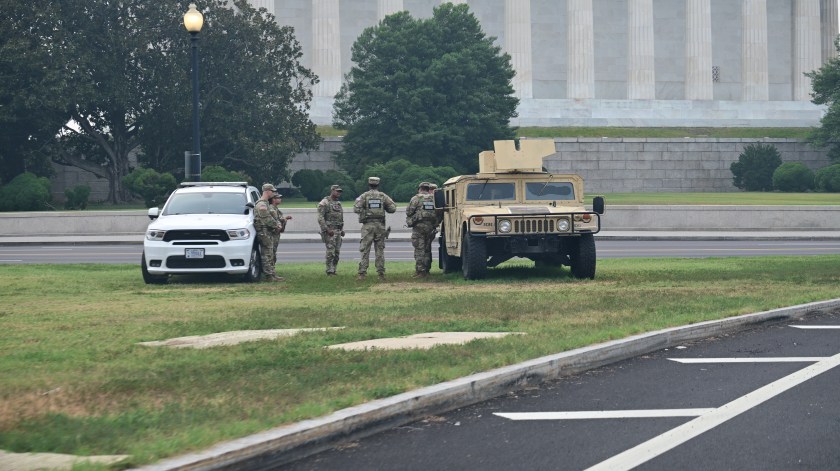
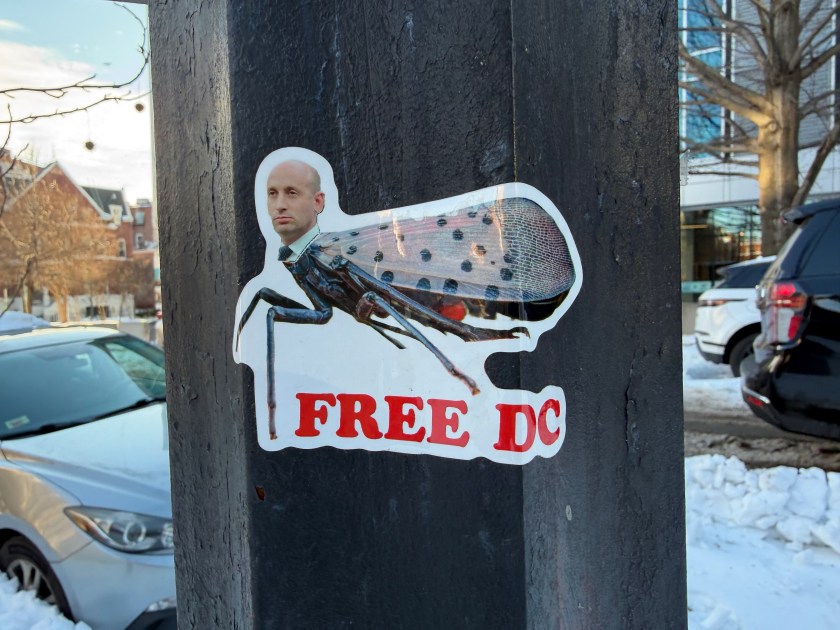
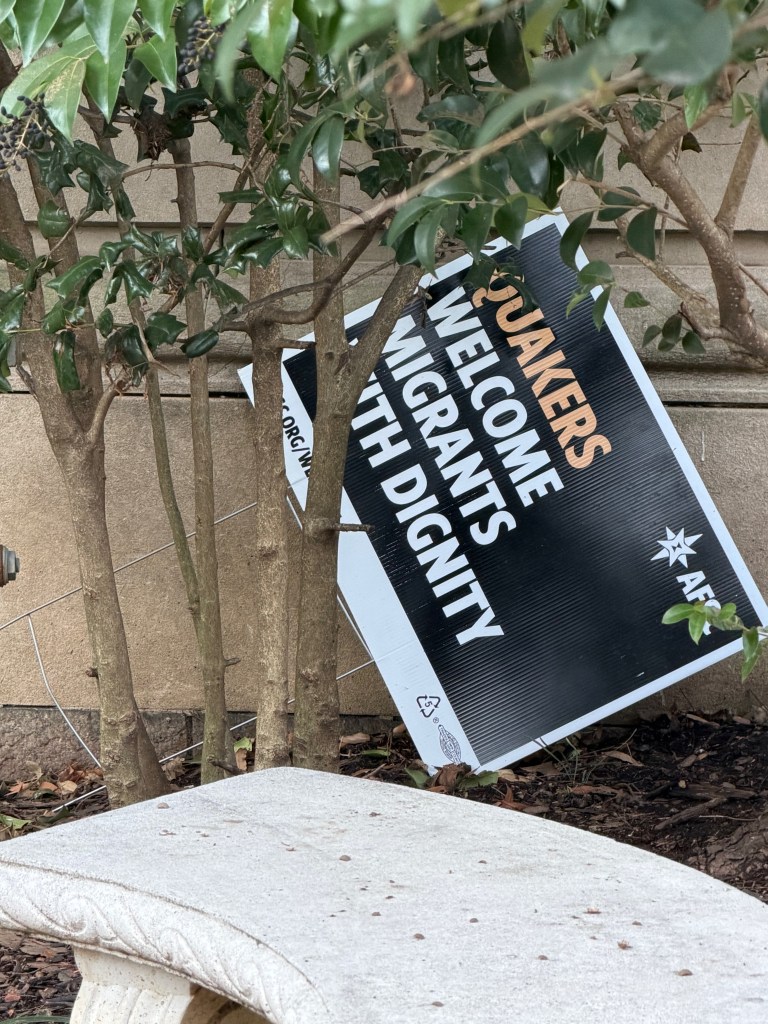
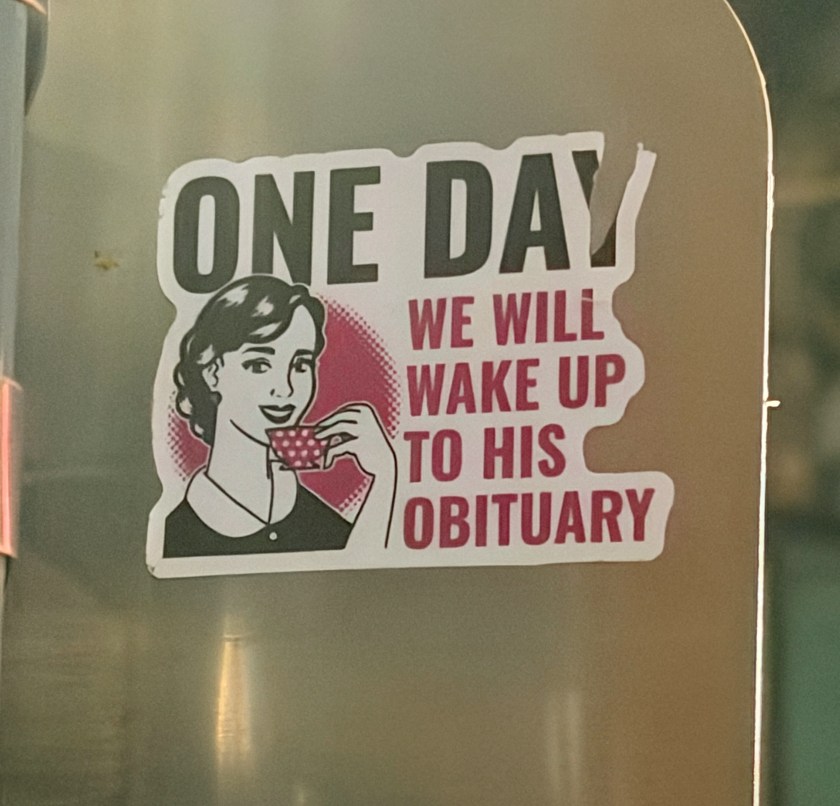
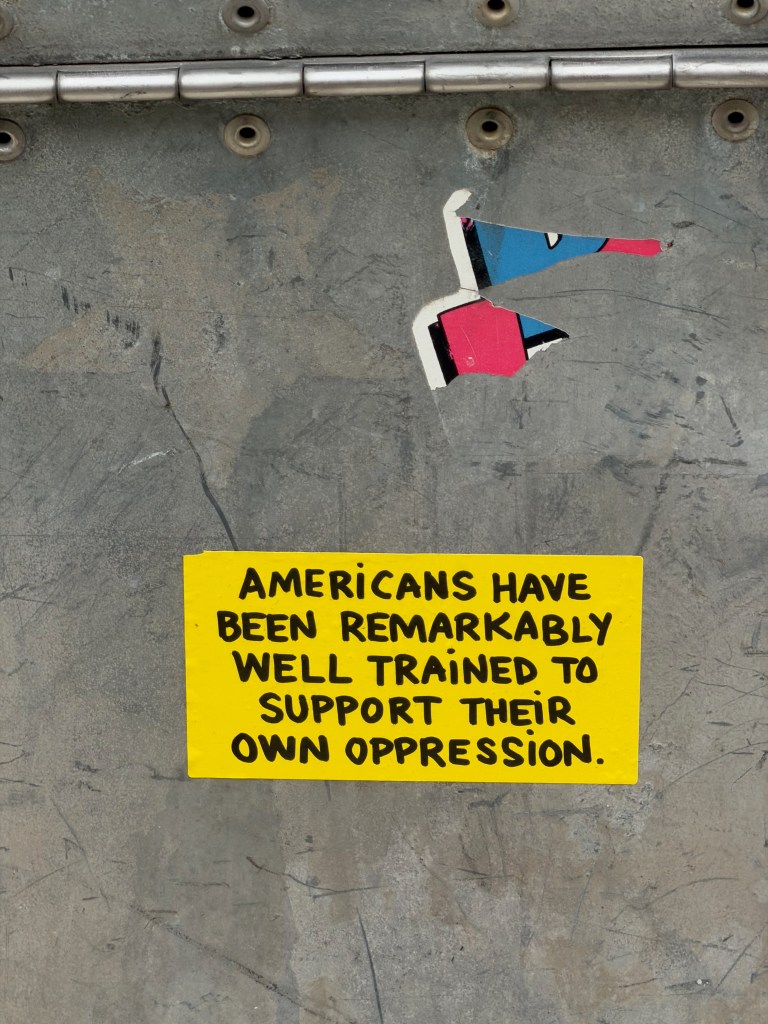
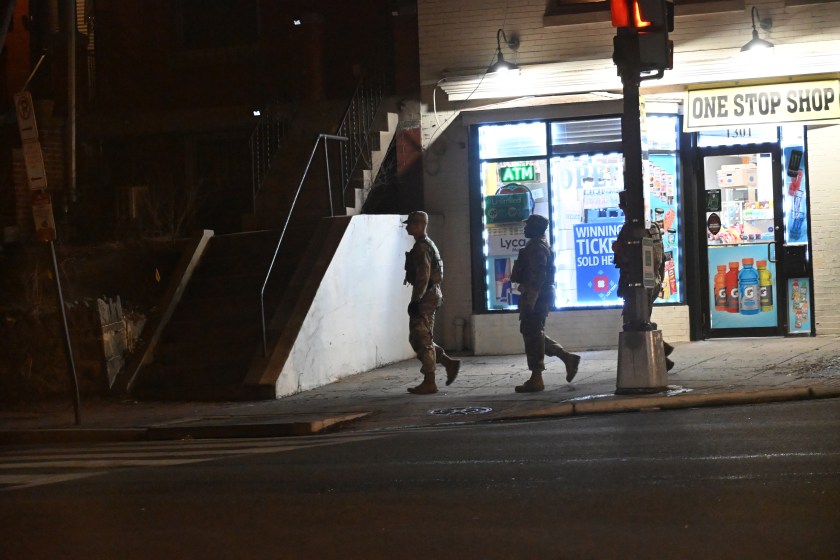
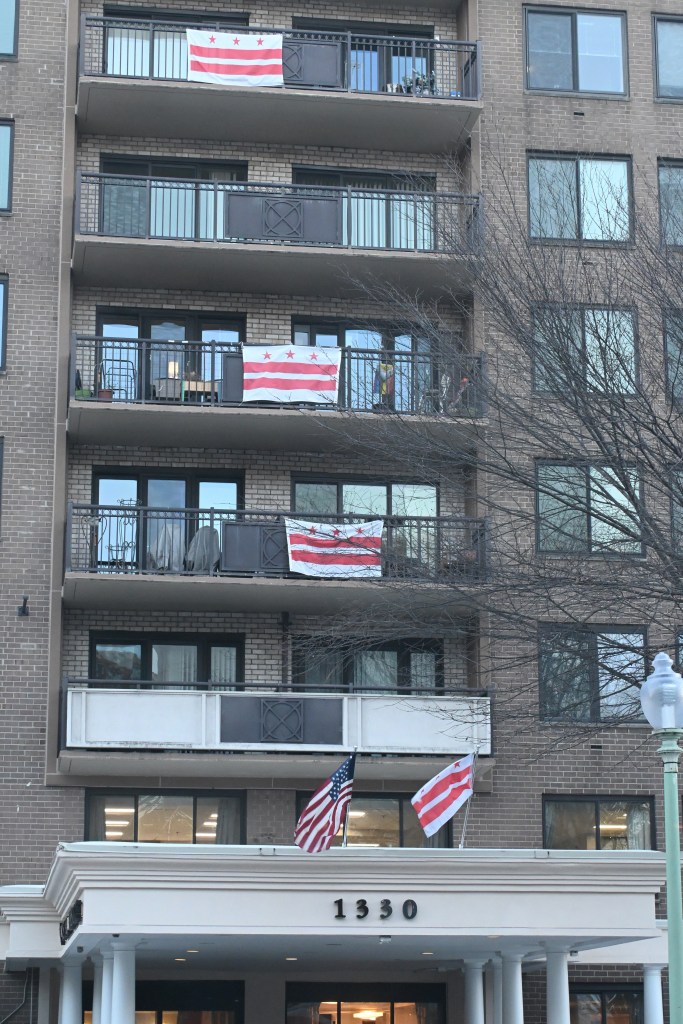
in Washington, D.C., on Saturday, July 18, 2026.
Photo by Gilbert Dunkley
Meanwhile, Trump is keeping the National Guard deployed in Washington, D.C., through next Inauguration Day. Why? Are they to be a sort of Republican Guard for him in case the people tire of him and rise against him? There is no practical need for the National Guard in D.C., but here they are, roaming our streets, day after day, night after night. The deployment of these nearly 5,000 troops in the nation’s capital is costing the American taxpayer hundreds of millions of dollars. And this needless deployment has already sent one National Guard member to her grave and left one of her colleagues with life-altering brain injuries.
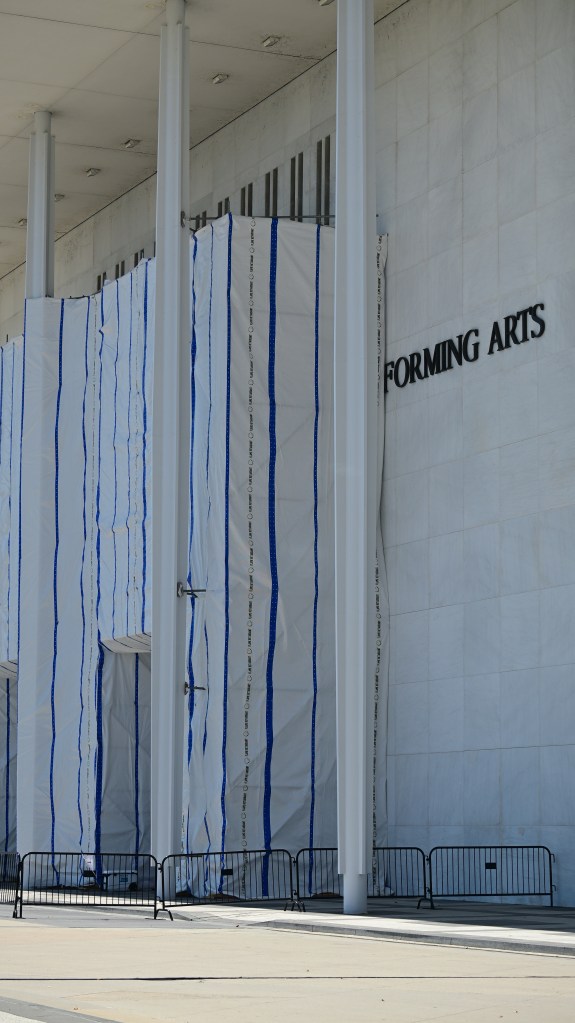
And why is there tarp still covering the section of the Kennedy Center facade where Trump’s name was removed last month on the order of a judge? Trump’s lickspittles who now run the Kennedy Center have complied with the letter of the judge’s order but are defying the spirit of that order, just to soothe the toxic ego of their narcissistic fuhrer. The fact that they have not removed the tarp to reveal the name of President John F. Kennedy without Donald Trump’s name creating a stain above it tells me that they have no respect for the memory of Kennedy, whose memorial that building is.
That petty defiance of the law and craven obedience toward the occupant of the White House is yet another blaring signal to us to expect dishonesty from Trump and his enablers in any matter, great or small.







 Democracy Warrior